4620 East Douglas, Suite 100 Wichita, KS 67208

Dental Implants in Wichita, KS
If your teeth are shifting and your jaw aches daily, your body is sending a clear message. Your shifting teeth and jaw pain are screaming for implants now — and patients near McConnell AFB should not ignore those signals. These symptoms often mean bone loss is already underway. The longer you wait, the harder treatment becomes.
At Pauly Dental, Dr. Terra Pauly helps Wichita-area patients understand when missing teeth have crossed into urgent territory. This article breaks down the warning signs that tell you action is overdue. We want you informed, not alarmed.
Why Shifting Teeth Near McConnell AFB Signal a Bigger Problem
When a tooth goes missing, neighboring teeth begin to drift. This is not a slow, harmless process. Within weeks, teeth on either side can tilt toward the open gap. Teeth above or below the space may also shift downward or upward to fill it.
This movement changes your bite. A misaligned bite puts uneven stress on your jaw joint. That stress often shows up as soreness, clicking, or chronic jaw pain. Many patients near McConnell AFB first notice this while chewing tough foods.
Shifting teeth also make cleaning harder. Crowded or tilted teeth trap bacteria more easily. That increases your risk of decay and gum disease in the surrounding teeth. What started as one missing tooth can quickly become a multi-tooth problem.
The Bone Loss Warning Sign You Cannot See
Jaw bone loss is one of the most serious consequences of missing teeth. Your jawbone stays healthy because tooth roots stimulate it constantly. Remove a tooth and that stimulation disappears. The bone beneath the empty socket begins to shrink within the first year.
You may not feel bone loss happening. That is what makes it so dangerous. By the time jaw pain or a sunken facial appearance develops, significant bone may already be gone. X-rays during a Dental Exams And Cleanings appointment can reveal how much loss has occurred.
Bone loss also affects implant eligibility. Implants require enough healthy bone to anchor the titanium post securely. Patients who wait too long may need a bone graft before implant placement. That adds both time and complexity to treatment.
Acting early preserves your options. Implants placed before major bone loss occurs integrate faster and more predictably. Every month of delay can reduce the quality of the foundation your implant needs.
Difficulty Chewing: A Sign You Have Already Waited Too Long
Struggling to chew is not just uncomfortable — it is a red flag. When teeth are missing or severely shifted, your chewing efficiency drops dramatically. Many patients unconsciously avoid hard or chewy foods. Over time, this limits nutrition and affects overall health.
Jaw pain during meals is another warning sign. It often points to temporomandibular joint (TMJ) stress caused by bite imbalance. That imbalance almost always traces back to one or more missing teeth. Treating the source — not just the pain — is what creates lasting relief.
Here are common signs that implants are urgently needed:
- Teeth visibly tilting or moving toward a gap
- Jaw soreness or clicking when chewing
- Difficulty biting into firm foods like apples or crusty bread
- A sunken look along the jaw or cheek area
- Increased sensitivity in teeth near a missing tooth
- Loose-feeling teeth in areas surrounding a gap
If two or more of these describe your experience, schedule an evaluation soon. These symptoms compound each other over time. Waiting rarely improves the situation.
What Dental Implants Actually Do to Stop the Damage
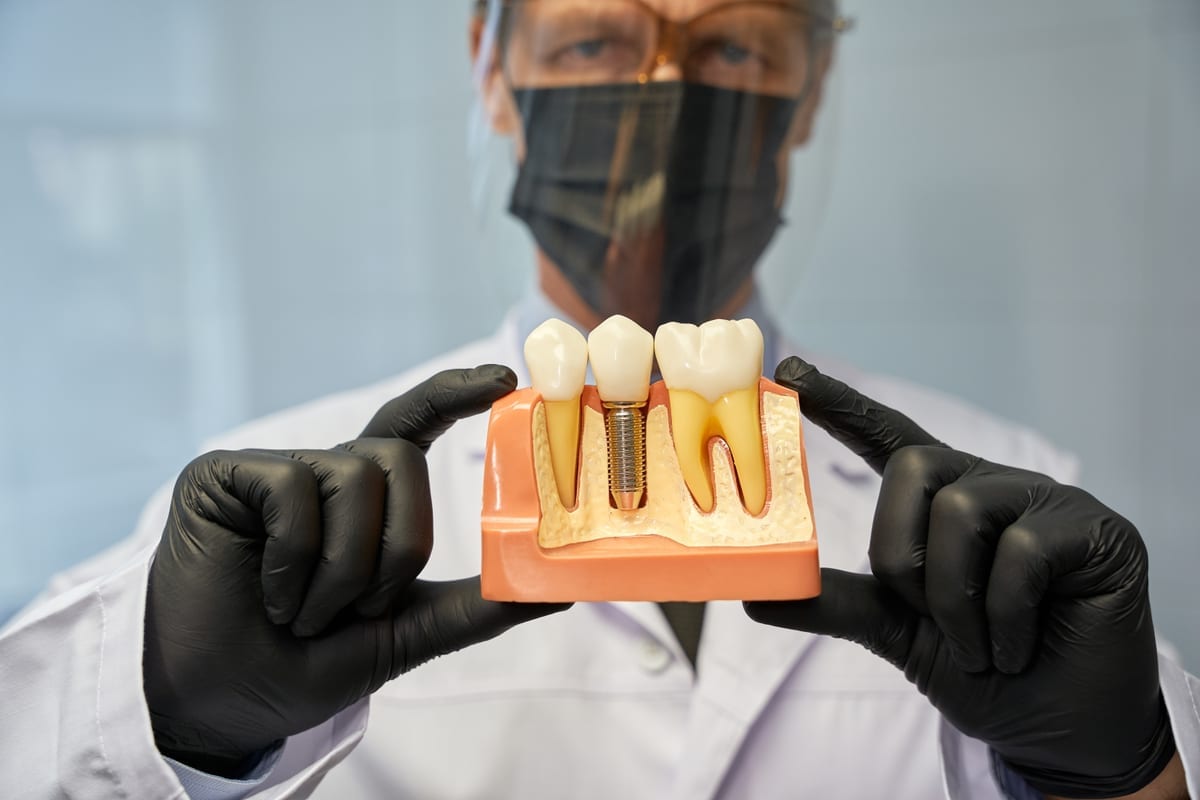
Dental implants work differently from bridges or dentures. A titanium post is placed directly into the jawbone. This post acts like a tooth root. It stimulates the bone the same way a natural root does, stopping further bone loss at the site.
Once the post integrates with the bone, a custom crown is attached. The crown looks, feels, and functions like a real tooth. Neighboring teeth have no reason to shift because the gap is fully occupied. The bite returns to balance, reducing jaw joint stress.
Here are the core benefits of choosing implants over other options:
- Stops bone loss by stimulating the jaw directly
- Prevents neighboring teeth from drifting or tilting
- Restores full chewing function without dietary restrictions
- Looks and feels like a natural tooth
- Can last decades with proper care
- Does not require altering healthy adjacent teeth
Dr. Terra Pauly evaluates each patient individually. Treatment plans are built around your specific bone health, bite, and goals. No two cases are identical, which is why a personalized consultation matters.
Families Near McConnell AFB: Dental Health Starts Early
Tooth loss and shifting teeth are not just adult concerns. Children who lose baby teeth too early can also experience drifting and alignment problems. Addressing dental health from childhood reduces adult complications significantly.
Pauly Dental provides Pediatric Dentistry for younger patients in the Wichita area, including families stationed near McConnell AFB. Early dental care builds habits and catches problems before they escalate. Teaching kids to protect their teeth sets them up to avoid these adult warning signs entirely.
Whether you are seeking care for yourself or your child, our team approaches every visit with patience and care. We believe informed patients make better decisions for their long-term health.
Do Not Wait Until the Damage Is Done
Jaw pain, shifting teeth, and difficulty chewing are not symptoms to manage — they are symptoms to resolve. If your shifting teeth and jaw pain are screaming for implants now, the McConnell AFB area has a trusted resource nearby. Pauly Dental is here to help you understand your options clearly and without pressure.
The best time to address missing teeth was the day they were lost. The second-best time is today. Early action protects your bone, stabilizes your bite, and keeps your surrounding teeth healthy. Book Now to schedule your appointment with our team.
Frequently Asked Questions
How quickly does bone loss begin after a tooth is lost?
Bone loss can begin within the first few months after losing a tooth. Studies show measurable bone reduction in the first year. The process accelerates without the stimulation a tooth root provides. Acting quickly gives you more bone to work with for implant placement.
Can shifting teeth move back into place on their own?
Teeth do not naturally return to their original positions once they begin drifting. Without intervention, the shifting continues and worsens over time. An implant or orthodontic treatment is needed to stop and correct the movement. Waiting only allows further misalignment to occur.
Is jaw pain always related to missing teeth?
Not always, but missing teeth are one of the most common causes of chronic jaw pain. When the bite becomes unbalanced due to tooth loss, the jaw joint absorbs extra stress. This can lead to TMJ issues that cause persistent soreness or clicking. An evaluation will identify whether missing teeth are the root cause.
Who is a good candidate for dental implants?
Most adults with good general health and adequate jawbone density are candidates for implants. Patients with bone loss may need a bone graft first to create a stable foundation. Dr. Terra Pauly reviews each patient’s X-rays and health history to determine the best approach. A consultation is the best way to know if implants are right for you.
How long does the dental implant process take?
The full process typically takes several months from placement to final crown attachment. The titanium post must fuse with the jawbone before the crown is placed. This healing period varies by individual. Some patients with sufficient bone may qualify for a faster timeline — your consultation will outline what to expect.